
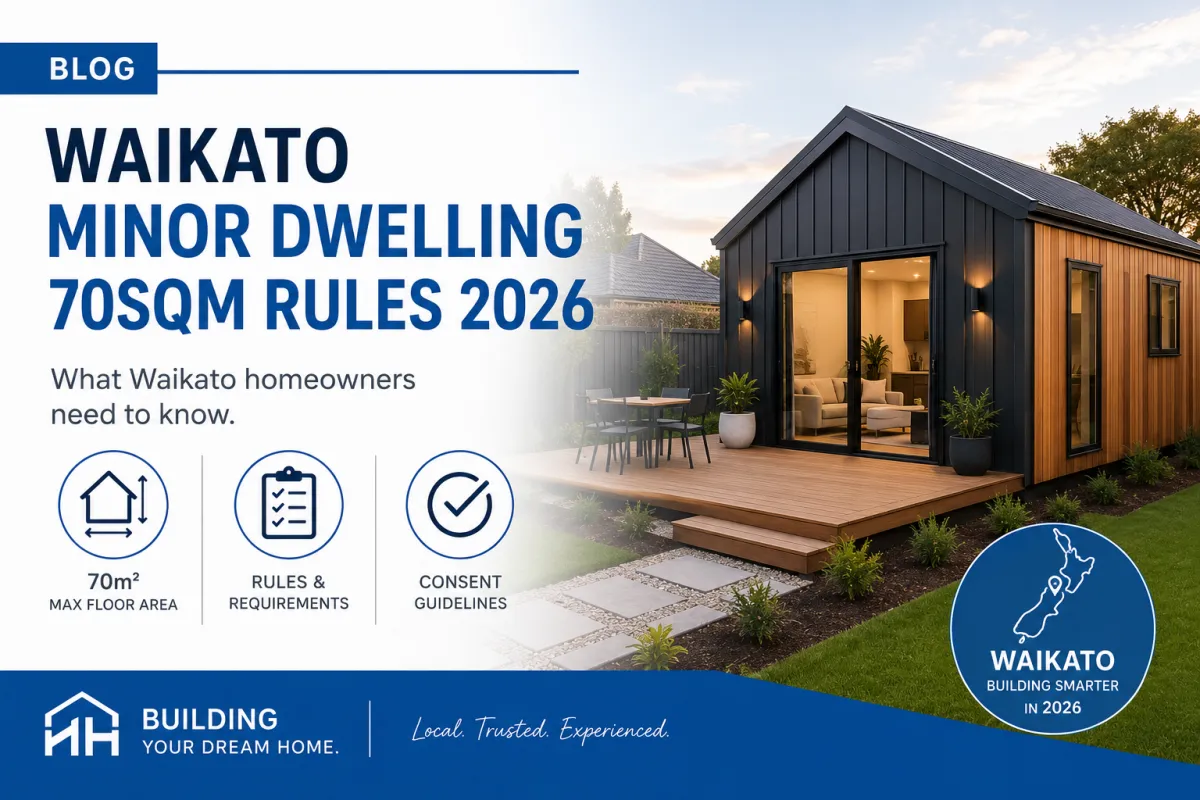
New 70m² Minor Dwelling Rules: What They Mean in the Waikato
A Big Change for Waikato Sections: Build a Minor Dwelling Without a Building Consent
From 15 January 2026, a new exemption in the Building Act means Kiwi homeowners can build a self-contained minor dwelling — up to 70m² — without needing a building consent. It's one of the more significant changes to residential building rules in years, and it opens up options that weren't practical before for a lot of Waikato sections.
Here's what it actually allows, what still applies, and where it makes sense.
What the exemption actually covers
To qualify, the dwelling needs to meet a specific set of conditions:
Maximum internal floor area of 70m², single storey only — no lofts or sleeping mezzanines
Maximum height of 4.0m, and lightweight construction (timber or light steel framing)
At least 2.0m separation from other buildings and from legal boundaries
A simple plumbing setup (no pumped systems), with its own electricity connection
One minor dwelling per site, in residential, rural, mixed-use, and Māori purpose zones
It still has to meet every part of the Building Code — structure, weathertightness, fire safety, insulation, drainage — and licensed tradespeople are required for restricted building work. You'll need a Project Information Memorandum (PIM) before starting, and compliance documentation has to be submitted once it's built. Site coverage and setback rules still apply under the local district plan, and council development contributions typically still apply too.
In other words: it's a genuine shortcut around the consent process, not a shortcut around doing it properly.
Two ways Waikato homeowners are using it
Housing family, without building a second house. For a lot of families, this is about a parent moving closer, or an adult child staying on the section a bit longer — without everyone living under one roof. A single-storey, self-contained unit at the back of the section can make that work without a major renovation or a second mortgage.
A second income stream on land you already own. The exemption doesn't require the dwelling to house a family member — rental use is allowed. For homeowners with a section that has the room, that's a rental return on space that was otherwise sitting empty, without the cost and consent timeline of a full second dwelling. It's the same logic behind the growing interest in duplex builds we've written about before, just at a smaller scale and a lower entry cost.
What to check before you start
Every section is different, and the exemption doesn't override everything:
Confirm your specific site's zoning, setbacks, and site coverage limits with your local council (Hamilton City Council and Waikato District Council each administer their own district plan rules)
Check what your water, wastewater, and power connections can actually support
Factor in council notification requirements before and after construction
Get written confirmation from your builder that the design meets every condition of the exemption — it's easy to assume something qualifies when a detail (like a loft, or a heavier cladding choice) actually takes it back into standard consent territory
How MH Builders can help
We can design and build a minor dwelling that's confirmed to meet the exemption from the start — sized, specified, and sited correctly, with a fixed price so there are no surprises partway through. If a full consent path ends up being the better fit for your section, we'll tell you that too.
If you're weighing up a minor dwelling for family or for rental income, get in touch for a free consultation and we'll walk through what's realistic for your section.